

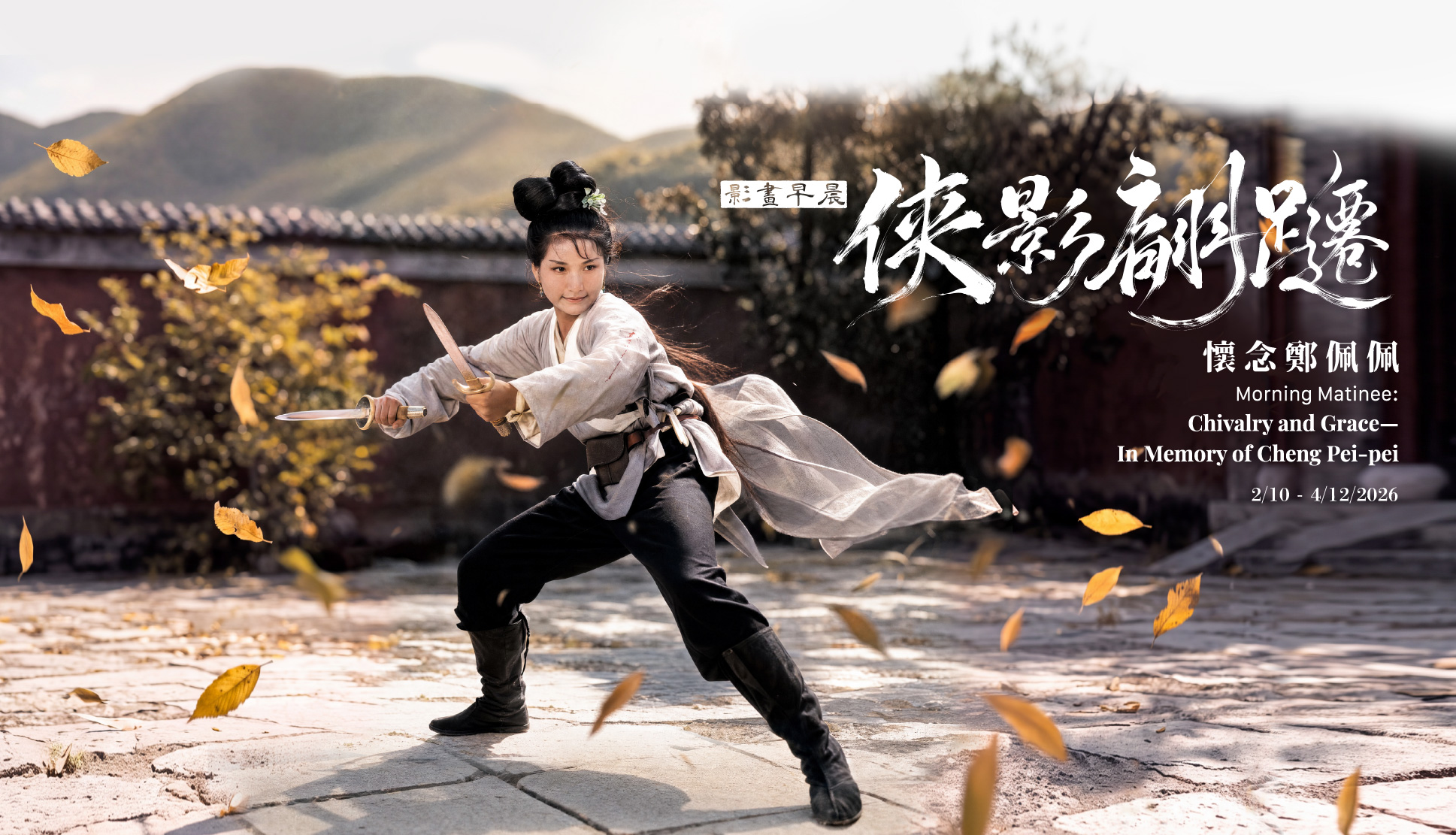
Cheng Pei-pei (1946–2024) was a graduate of the second intake of Shaw Brothers Studio’s Southern Acting Training Class. Her first film role was in The Lotus Lamp (1965), co-starring Linda Lin Dai, in which Cheng took on a male role. However, Lin Dai died during production, and the first film Cheng completed and saw released was Lovers’ Rock (1964). She rose to fame in 1966 with her role as Golden Swallow in King Hu’s Come Drink with Me, and went on to appear in other wuxia films including The Thundering Sword (1967), The Golden Swallow (1968), The Jade Raksha (1968) and Dragon Swamp (1969), working most frequently with director Lo Wei. Most of Cheng’s wuxia films grossed more than one million Hong Kong dollars at the box office, an impressive record that earned her the title of “Queen of Wuxia Films”. As huangmei diao films declined and wuxia cinema rose to prominence, Jimmy Wang Yu emerged as the most popular male star. Cheng was the only female star whose box-office appeal could rival his, making her one of Hong Kong’s biggest female stars.
Cheng married and retired from the film industry in 1970. She returned to the screen in 1973, starring in None but the Brave (a.k.a. Kung Fu Girl), a kung fu film directed by Lo Wei for Golden Harvest. Thereafter, she appeared intermittently in films and television dramas in Hong Kong and Taiwan. In 1982, she taught aerobic dance on TVB, and from the late 1980s she produced television programmes in the United States and hosted her own talk shows. In 1992, she returned to Hong Kong to co-star with Stephen Chow in Flirting Scholar. Her exuberant comic exchanges with Chow proved a huge hit with audiences and opened a new chapter in her career. She went on to work extensively in film and television in Hong Kong and Chinese Mainland, taking part in reality shows and even appearing in leading roles in Western films.
This programme presents ten films from Cheng Pei-pei’s career, beginning with the wuxia films that established her reputation during her Shaw Brothers years. Come Drink with Me was her breakthrough film, and also a landmark in King Hu’s development of a new style of martial arts cinema. The Golden Swallow brought together the two great wuxia stars Jimmy Wang Yu and Cheng Pei-pei in their only film together. Under another wuxia cinema master Chang Cheh, Cheng’s Golden Swallow remains the same character in name but is transformed in almost every other respect, a change she handles with remarkable precision. Dragon Swamp, directed by Lo Wei, with whom Cheng worked most frequently, gave her the unusual challenge of playing both a mother and her daughter, two women who resemble each other physically but have very different personalities, and provides a particularly striking demonstration of her acting range. Cheng’s status as the Queen of Wuxia rested not only on her extensive dance training and physical agility, which made her ideally suited to action roles, but also on her forthright and resilient character, which made her particularly convincing as a swordswoman. Together, these three films offer an opportunity to see all these qualities at work.
Beyond wuxia, Cheng appeared in a wide range of genres during her Shaw Brothers years. Her first completed film, Lovers’ Rock, is a romantic drama in which the beautiful locations of a fishing harbour provide the backdrop for her fresh and youthful screen presence. Song of the Orchid Island (1965) uses a romantic comedy as a vehicle for showcasing the distinctive customs and traditions of Orchid Island. Directed by Umetsugu Inoue, Hong Kong Nocturne (1967) is a musical that allows Cheng to make full use of her considerable dancing skills. In Operation Lipstick (1967), she finds herself caught up in an international spy caper, while her comic flirtation and physical sparring with Paul Chang Chung unfold alongside sequences of song and dance. Together, these four films reveal Cheng’s versatility, showing that she was equally compelling in dramatic and action roles.
The programme also includes three films from after Cheng’s departure from Shaw Brothers. Lo Wei’s None but the Brave (1973) is a kung fu film in which the fighting style is completely different from the swordplay of her earlier wuxia roles, requiring a more physically grounded approach. Cheng rose to the challenge, adapting herself to the changing times. Her seniority and stature within the industry also meant that she could hold her own alongside any leading star. In Alex Law’s Painted Faces (1988), she shares the screen with Sammo Hung, one of Hong Kong cinema’s biggest stars. Playing the teacher of a Cantonese opera troupe, she shares with Hung’s Master Yu a sense of melancholy at no longer having a stage or an audience. Cheng’s poised performance conveys the dignity of an ageing performer with great subtlety. Flirting Scholar marked Cheng’s triumphant return to the Hong Kong film industry. Paired with Stephen Chow in a riot of absurdist comedy, their rapid-fire exchanges are perfectly timed, creating an instantly memorable comic partnership. By the 1980s, Cheng’s rich life experience had brought greater maturity and versatility to her acting, yet the star quality that had defined her career never dimmed.