

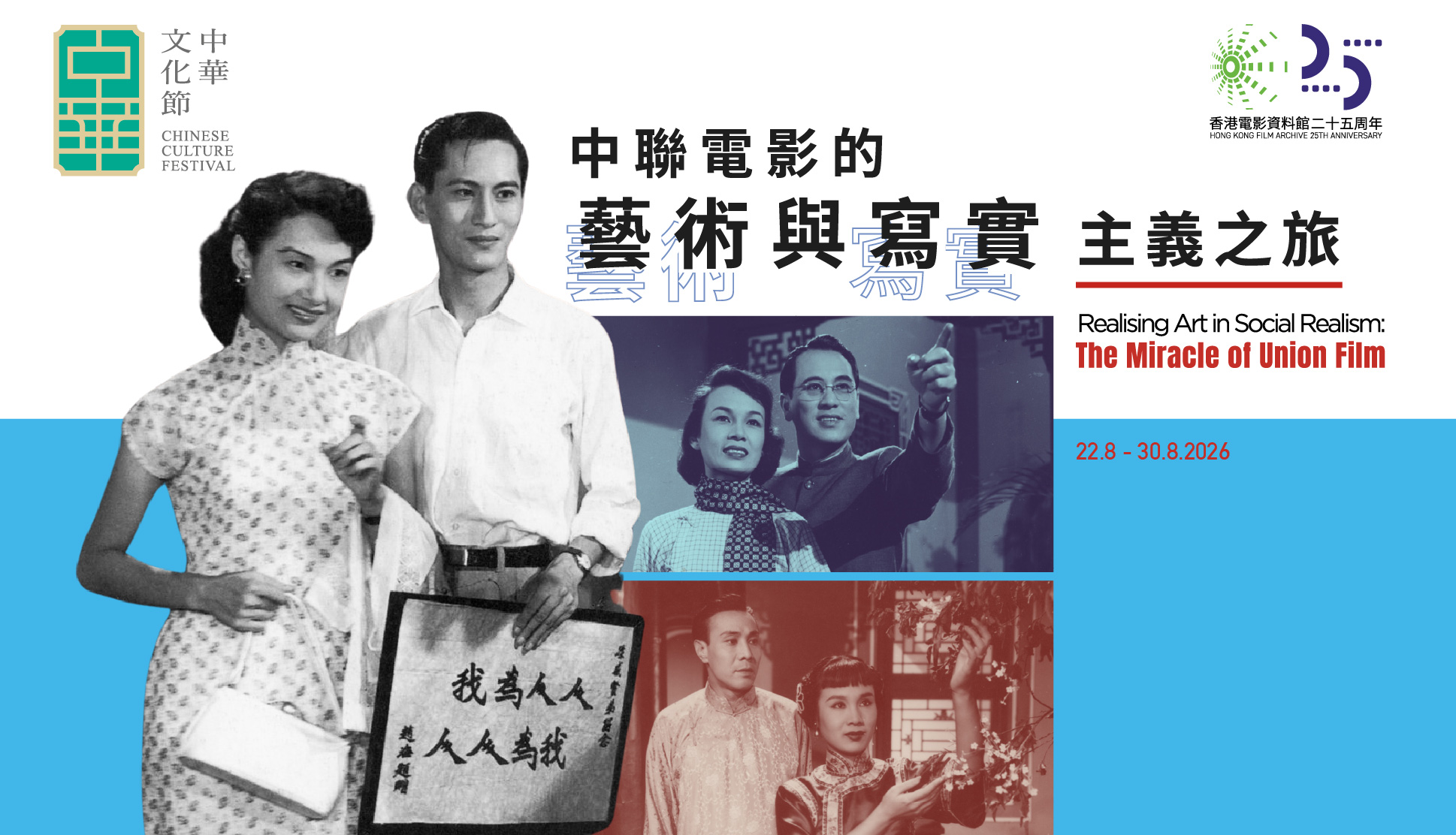
Union Film Enterprise Ltd, Sun Luen Film Company, Kong Ngee Company, and Overseas Chinese Films were once collectively known as the “Big Four” Cantonese film studios. They produced countless critically acclaimed blockbusters in the 1950s and 1960s, establishing a creative ethos centred on quality filmmaking. Among them, Union Film was the only company that operated as a “fraternity”. Adhering to artistic integrity, its 21 shareholders pooled their resources to produce features that struck a balance between entertainment and education, bringing refreshing change to Cantonese cinema.
The studio’s origins can be traced back to the late 1940s, when Hong Kong cinema entered its first post-war golden age. This was also a time when shoddy production as well as the proliferation of outlandish and erotic movies plagued the Cantonese film industry. In response, 164 professionals in the field launched a clean-up campaign to take a stand against such lowbrow works. On 15 November 1952, 19 key figures in Cantonese cinema founded Union Film of their own accord (Ma Si-tsang and Hung Sin Nui joined later). Inheriting the sense of mission and self-awareness of the literati who came before, they were “determined to educate the public” and hoped to “consolidate as well as elevate the artistic standards of Cantonese films”.
Union Film advocated collective creation: every script was discussed and revised thoroughly, and filming would not commence until the Screenwriters and Directors Committee reached consensus. This rigorous pre-production process also ensured that each film manifested the company’s overarching spiritual values. The studio infused mass entertainment with educational significance and artistic depth, resulting in works that embody not only the cultural heritage of Chinese civilisation and the literary and artistic essence of the New Culture Movement, but also modern values that embrace both Chinese and Western influences. Theme-wise, every film was substantive, reflecting either social realities or various ideals of interpersonal relationships. They most frequently revolve around family values – on which the Chinese people place great importance – and the endings often echo the belief in karmic reward and retribution, thereby laying down a standard for ethical conduct. Deeply influenced by progressive art, literature, and cinema, the company’s screenwriters and directors advocated for the freedom of choice in marriage and romance, as well as women’s liberation in many of their films. In terms of subject matter, the studio drew extensively from both ancient and contemporary Chinese literature while also localising and adapting foreign literary works. It also experimented with producing Chinese opera features, combining the aesthetics of the performing arts and cinema.
Having ceased production in 1964 and dissolved in 1967, Union Film produced a total of 44 movies over its decade-long existence. This programme features 6 early works that best illustrate its cultural ideals and their practical implementation. Among them are the magnum opuses of 5 directors in their creative prime as well as a collectively written and directed anthology film, showcasing the distinct artistic styles of its core members, all while upholding the Union Film spirit. Lee Tit, the longest-serving director at the studio, was adept at the realistic depiction of the lives of ordinary people, giving rise to works that resonated deeply with audiences; In the Face of Demolition (1953) established the tenet of mutual support in the face of adversity. Head of Screenwriting and Direction, Lee Sun-fung, possessed a distinctly cultivated sensibility, as he was well-versed in both Chinese and Western literature and cinema; Spring (1953), his adaptation of Ba Jin’s renowned novel of the same name, was recognised with an award from the Ministry of Culture of the People’s Republic of China. Meanwhile, despite being the youngest director on the Screenwriters and Directors Committee, Chun Kim had a knack for handling the emotional conflicts of family dramas; Parents’ Hearts (1955) is an especially poignant work from his filmography. Chu Kea, who joined the industry at the age of 13, drew on his diverse behind-the-scenes experience to become a master of melodrama; in An Orphan’s Tragedy (1955), he infused the narrative with Chinese nuances to heighten tension. Ng Wui was the most prolific director at Union Film; a versatile genre-hopping director, he helmed four Chinese opera films, including The Precious Lotus Lamp (1956), and pioneered the diversification of the company’s productions. Lastly, the two instalments of Love (1955) were a studio-wide collaboration involving its entire roster of writers, directors, and actors, embodying the spirit of collective creation.
Union Film’s catalogue combines entertainment with education, in the hope that audiences would perceive its concerns for society and people’s livelihoods, its longing for sympathetic human relationships, and its educational philosophy that blends traditional Chinese and modern culture while enjoying the magic of the silver screen.
To mark its tenth anniversary, the Archive organised a special programme entitled “All for One and One for All: Union Film”, which looked back at the studio’s classic works. As we celebrate our twenty-fifth anniversary, we have revisited Union Film’s works and find that its artistic spirit remains as fresh as ever. Over the past fifteen years, thanks to technological advances, the Archive has digitised many of Union Film’s finest works. On this occasion, we are delighted to share these precious achievements with the public.
Each screening will be followed by a post-screening talk. Details of the speakers will be announced in due course on the Hong Kong Film Archive’s website.
| Presented by: |
 |
| Organised by: |
   |
The CCF, presented by the Culture, Sports and Tourism Bureau and organised by the Chinese Culture Promotion Office under the LCSD, aims to promote Chinese culture and enhance the public's sense of national identity and cultural confidence, thereby facilitating patriotic education. It also aims to attract top-notch artists and arts groups from the Chinese Mainland and other parts of the world for exchanges in Chinese arts and culture. The CCF 2026 is held from June to September. It will host various forms of distinctive stage programmes and related extension activities, film screenings, thematic exhibitions, talks, workshops, as well as community and school activities, affording the public and visitors more opportunities to appreciate and experience the beauty of fine traditional Chinese culture. For more information, please visit www.ccf.gov.hk.