

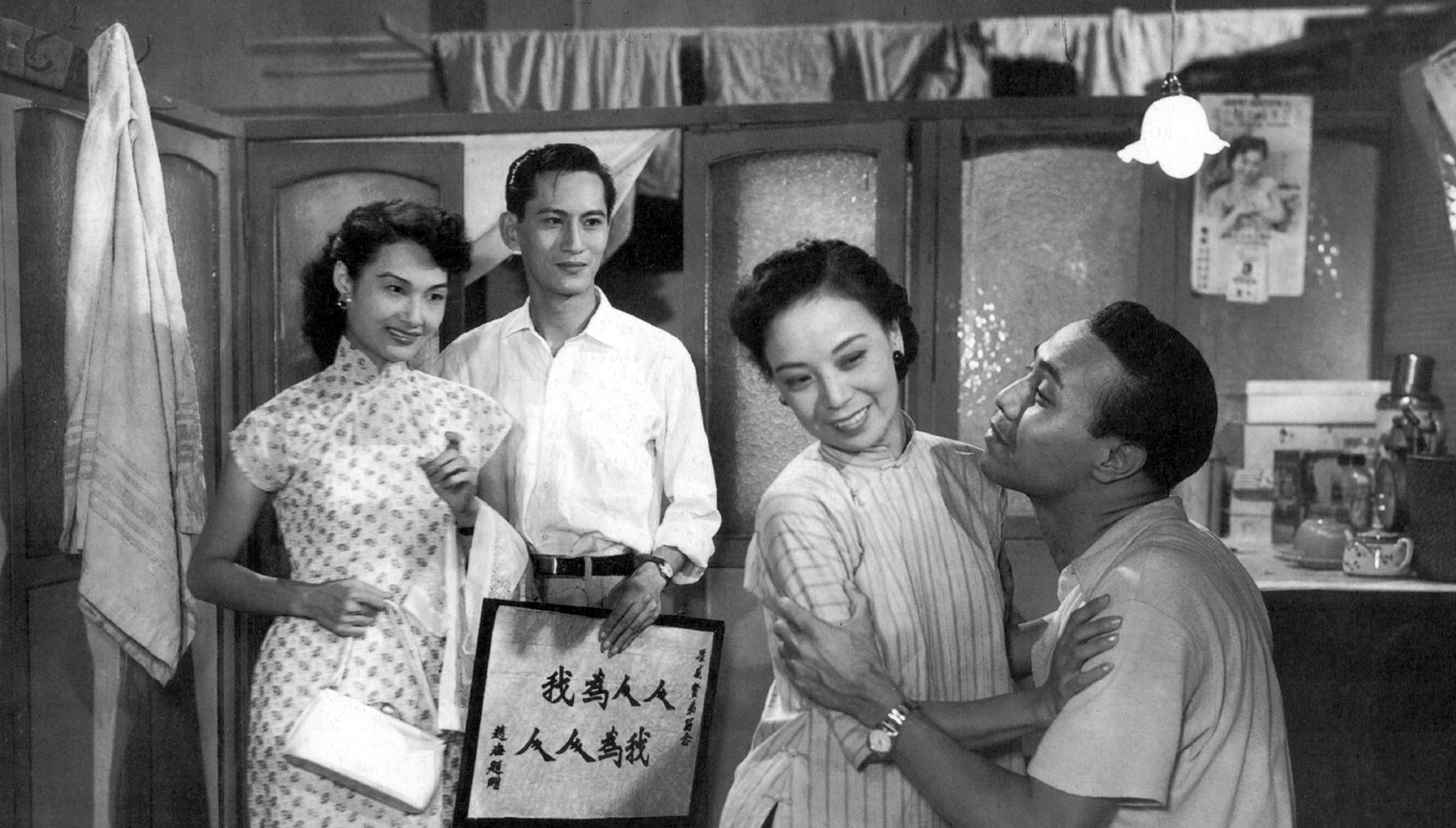
In the Face of Demolition (2K Digitised Version)
Dir: Lee Tit
Scrs: Yu Kon-chi (joint pseudonym of Lo Duen and Chan Wan)
Cast: Ng Cho-fan, Cheung Ying, Tsi Lo Lin, Mui Yee, Wong Man-lei
1953 | B&W | DCP | Cantonese | 129min
Lee Tit was adept at the realistic depiction of the lives of ordinary people. In the Face of Demolition is a new spin on his 1940 classic Refugees in the City, with the diverse characters living in the dilapidated building serving as a microcosm of Hong Kong society in the post-war period. The film opens with a young teacher moving into Fife Lane and follows the joys and sorrows of each tenant—from a virtuous dance hostess and an upright taxi driver to a washed-up big shot, an unemployed sailor, and a landlady—weaving a tale full of dramatic twists and turns. Despite the ensemble cast, the work avoids stereotypes and instead uses dramatic tension to highlight social issues such as the neglect of building maintenance and bleak employment prospects. The main setting—a traditional tenement building—is divided into numerous partitioned flats and bed spaces, offering a vivid snapshot of 1950s and 1960s life and leaving a lasting mark of the era.
Union Film upheld the humanistic spirit of solidarity in both film and real life, embodying the Chinese philosophy of harmony and integration. In the Face of Demolition emphasises that although the tenants hail from different walks of life, they live in neighbourly accord; even when faced with adversity, they weather the storm together. “One for all, all for one,” the line delivered by Ng Cho-fan, serves as the guiding principle of this utopian community. The film’s enduring appeal is evident in Peter Ho-sun Chan’s homage to it in He Ain't Heavy, He's My Father (1993), a testament to this heartwarming sentiment that continues to move audiences.
| Date | Time | Venue |
|---|---|---|
| 22/8/2026 (Sat) # [Full House] | 1:00pm | Cinema, Hong Kong Film Archive |
The contents of the programme do not represent the views of the presenter. The presenter reserves the right to change the programme should unavoidable circumstances make it necessary.